Exploring the Different Types of Heat Shrink Tubes and Their Uses

You use heat shrink tubing to protect and organize electrical wires. This tubing insulates, seals against moisture, provides strain relief, and shields cables from abrasion. The global market for heat shrink tubing keeps growing, reaching USD 3.07 billion in 2025 and projected to hit USD 5.16 billion by 2034. Matching the right tubing type to your application improves safety and performance. Different Types of Heat Shrink Tubes offer unique properties, such as temperature resistance and flexibility. The table below shows some main types and their typical uses:
Type | Properties | Typical Uses |
|---|---|---|
Polyolefin | Shrink temp: 120° C; Range: -55° C to +135° C | General insulation, electrical work |
PVC | Shrink temp: 100° C; Range: -55° C to +105° C | Food, drink, general insulation |
PTFE | Shrink temp: 340° C; Range: -67° C to +250° C | High-temperature, chemical exposure |
Key Takeaways
Heat shrink tubing protects wires from moisture, chemicals, and abrasion, ensuring safety and longevity.
Different types of heat shrink tubes, like polyolefin and PVC, offer unique properties for various applications.
Choosing the right shrink ratio is crucial for a snug fit, enhancing insulation and strain relief.
Consider environmental factors and temperature ratings when selecting heat shrink tubing for your projects.
Using heat shrink tubing improves organization and reduces the risk of electrical failures in your work.
What Is Heat Shrink Tubing?
Definition
You use heat shrink tubing to cover and protect wires and cables. This tubing starts as a flexible plastic tube. When you apply heat, the tube shrinks tightly around whatever it covers. You get a neat, secure layer that holds everything in place. Heat shrink tubing comes in many materials, such as polyolefin, silicone, and fluoropolymer. You can choose from different Types of Heat Shrink Tubes based on your needs. Unlike electrical tape, heat shrink tubing gives you a permanent solution. You avoid sticky residue and messy wraps.
Heat shrink tubing stands out from other insulation methods. The table below shows how it compares to electrical tape:
Aspect | Heat Shrinkable Tubing | Electrical Tape |
|---|---|---|
Durability | Long-lasting; resistant to wear, heat, and moisture | Limited; adhesive weakens over time |
Temperature Resistance | Withstands high and low temperatures | Melts or hardens with temperature changes |
Insulation Quality | Provides uniform insulation and sealing | May leave gaps or uneven layers |
Application | Permanent solution | Temporary or emergency fix |
Aesthetic & Professional Finish | Neat, clean, and protective | Messy, adhesive residue possible |
Material Options | Silicone, polyolefin, fluoropolymer, etc. | Primarily PVC |
Purpose and Benefits
You gain several benefits when you use heat shrink tubing. This tubing protects your wires and cables from moisture, chemicals, oils, and UV rays. You get strong electrical insulation that prevents shocks and short circuits. The tubing also gives strain relief, so wires do not break easily. You can bundle wires together and keep your workspace organized. The tubing helps stop corrosion caused by moisture and harsh environments.
Protection against environmental factors keeps your wires safe.
Electrical insulation prevents dangerous accidents.
Strain relief reduces stress on cables.
Organization and bundling make your projects tidy.
Corrosion resistance extends the life of your equipment.
You find heat shrink tubing in electrical wiring, automotive work, and aerospace projects. You get reliable performance in demanding conditions. You can select from different Types of Heat Shrink Tubes to match your project’s temperature and protection needs.
Types of Heat Shrink Tubes
You can choose from several Types of Heat Shrink Tubes, each designed for specific needs. Understanding the differences helps you select the best option for your project. Below, you will find the main types and what makes each one unique.
Polyolefin
Polyolefin heat shrink tubes are the most popular choice for many electrical and industrial uses. You get flexibility, durability, and strong insulation. These tubes work well in tough environments, including aerospace.
Property | Description |
|---|---|
Flexibility | Conforms to different shapes and sizes |
Durability | Lasts long, even in demanding conditions |
Insulation Properties | Protects against electrical interference and environmental factors |
Temperature Resistance | Handles a wide range of temperatures |
Weight Savings | Lightweight, helps reduce overall weight |
Versatility | Comes in many sizes and colors |
Polyolefin tubes give you reliable insulation and protection, even under extreme conditions. You save weight, which is important in aircraft and spacecraft. You also find them easy to install, which saves time and labor.
Here are some key ratings for polyolefin tubes:
Property | Rating |
|---|---|
Continuous Operating Temp | Up to 125°C (257°F) or 135°C (275°F) |
Low Temperature Flexibility | Down to -55°C |
Shrink Start Temperature | 90 - 100°C (194 - 212°F) |
Full Shrink Temperature | 120 - 150°C (248 - 302°F) |
Chemical Resistance | Resists automotive fluids, solvents, acids, alkalis |
You often use polyolefin tubes in aerospace, automotive, and electronics because they offer enhanced reliability and versatility.
PVC
PVC heat shrink tubes give you a cost-effective solution for electrical insulation. You can use them when you do not need a wide temperature range. These tubes are common in automotive interiors and general wiring.
PVC tubes are affordable and easy to use. However, they have some limits:
Limitation | Description |
|---|---|
Limited high-temperature resistance | Cannot withstand high temperatures effectively. |
Lower chemical resistance | Less resistant to chemicals than advanced materials. |
You should use PVC tubes for projects that do not face high heat or harsh chemicals. They work well for bundling wires, color-coding, and protecting connections in dry, indoor spaces.
Dual-Wall Adhesive
Dual-wall adhesive heat shrink tubes give you extra protection in harsh environments. You get two layers: an outer polyolefin layer for strength and insulation, and an inner adhesive layer that melts when heated. This creates a watertight seal.
The outer layer gives you mechanical strength and insulation.
The inner adhesive melts and forms a tight, waterproof seal.
This design offers better protection than single-wall tubing.
You can use dual-wall adhesive tubes in places where moisture, chemicals, or vibration are problems. In the automotive industry, you protect wiring harnesses and engine compartments. In marine settings, you waterproof splices and shield cables from corrosion.
Dual-wall adhesive tubes help you keep electrical connections clean, dry, and secure, even in the toughest conditions.
Fluoropolymer
Fluoropolymer heat shrink tubes stand out for their high resistance to heat and chemicals. You get unmatched durability and protection, even in extreme environments.
High resistance to solvents, acids, and bases
Excellent electric insulation
Extreme weatherability and flame retardance
Corrosion protection and reduced friction
You often see fluoropolymer tubes in aerospace, medical, and petrochemical industries. They last longer than PVC or polyolefin tubes and can handle temperatures above 200°C. You should choose fluoropolymer tubes when you need the best performance for critical applications.
Elastomeric
Elastomeric heat shrink tubes give you flexibility and strong protection. You use them to insulate electrical connections, bundle cables, and provide strain relief. These tubes stretch and return to shape, making them ideal for moving parts or areas with frequent bending.
You find elastomeric tubes in many industries:
Electrical insulation for wires and components
Cable bundling and management
Strain relief to prevent cable breakage
Color-coded identification
Automotive repairs and custom wiring
Elastomeric tubes help you organize cables, protect against moisture, and extend the life of your equipment.
When you understand the Types of Heat Shrink Tubes, you can match the right tube to your needs. Each type offers unique benefits for different environments and applications.
Shrink Ratios
Common Ratios
When you choose heat shrink tubing, you need to know about shrink ratios. The shrink ratio tells you how much the tubing will shrink when you apply heat. You measure this by comparing the original diameter to the final, shrunken diameter. For example, a 2:1 ratio means the tubing shrinks to half its original size. This helps you pick the right size for your wires or cables.
Here is a table showing the most common shrink ratios and what they mean:
Shrink Ratio | Description | Diameter Reduction | Example | Recovery Temperature |
|---|---|---|---|---|
2:1 | Most common, shrinks to half its size | 50% | 12mm to 6mm | 90°C to 143°C |
3:1 | Shrinks to one-third of its size | 66.67% | 12mm to 4mm | 90°C to 125°C |
4:1 | Shrinks to one-fourth of its size | 75% | 12mm to 3mm | 90°C to 125°C |
You see 2:1 as the most popular choice for general electrical work. If you need to cover connectors or uneven shapes, you might use 3:1 or 4:1 tubing. These higher ratios help the tubing fit tightly over larger or irregular objects.
Choosing the Right Ratio
You want your heat shrink tubing to fit snugly and protect your wires. Picking the right shrink ratio is important for both safety and performance. Here are some tips to help you decide:
A correct shrink ratio gives you a tight fit around wires and terminals. This improves insulation and strain relief.
Higher ratios, like 3:1 or 4:1, seal better. You use these for waterproofing, especially with adhesive-lined tubing.
Using a ratio that is too large can waste material and increase costs without extra benefits.
Different jobs need different ratios. Think about the shape and size of your components before you choose.
Tip: Always measure the largest part you need to cover and check the tubing’s minimum shrink diameter. This helps you avoid loose or overstretched tubing.
When you match the shrink ratio to your project, you get better protection and a cleaner finish. You also save time and money by using the right amount of material.
Selecting Heat Shrink Tubes
Environmental Factors
You need to think about the environment where you will use heat shrink tubing. Outdoor and industrial settings can expose cables to moisture, chemicals, oils, and UV rays. Some Types of Heat Shrink Tubes are made for outdoor use and offer UV resistance. If you use tubing outside, sunlight can break down the material and cause brittleness. Rain and humidity can let moisture in, leading to corrosion and electrical failure. Chemicals from pollutants or automotive fluids can damage the tubing and reduce its protection.
Ultraviolet radiation can make tubing brittle and crack.
Moisture can cause corrosion and electrical problems.
Chemicals can weaken the tubing and lower its protective abilities.
Tip: Choose tubing with UV, moisture, and chemical resistance for outdoor or industrial projects. This helps your cables last longer and stay safe.
Temperature Ratings
You must check the temperature rating before you pick heat shrink tubing. If you use tubing in high-voltage systems, the material must handle the heat. Tubing that cannot handle the temperature may soften, melt, or crack. For aerospace, you need materials like PTFE, Viton, or PVDF because they work in extreme temperatures from −65°C to +260°C. For automotive, PVDF and elastomer work well from −40°C to +150°C.
Material | Temperature Rating |
|---|---|
PVC | 90°C or 105°C |
Polyolefin | 105°C or 125°C |
Transparent Tube | 105°C |
Ordinary Tube | 125°C |
Military Standard | 135°C |
PVDF | 150-175°C |
Rubber | 200°C |
Teflon | 260°C |
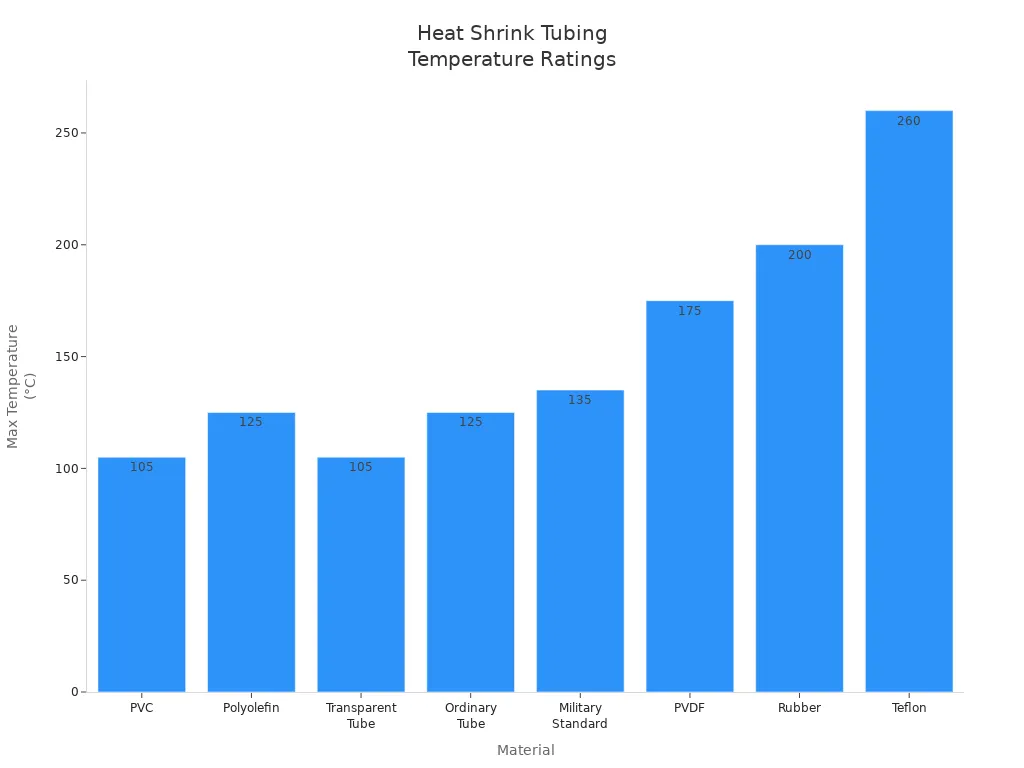
Always match the tubing’s temperature rating to your project’s needs. This prevents material failure and keeps your cables safe.
Flexibility and Protection
You want tubing that protects your cables and fits your project. Heat shrink tubing gives strain relief and reinforcement where cables bend or pull. This stops conductor fatigue and mechanical failure. After you apply the tubing, it becomes less flexible than before. If your cables move or vibrate often, you may need tubing with extra flexibility or consider alternatives like convoluted tubing.
Heat shrink tubing adds a tough layer that shields cables from abrasion and friction.
It provides strain relief and reduces the risk of wires breaking.
The materials used can resist environmental factors and work well in harsh conditions.
You can repair insulation and bundle wires together for better protection.
Choose tubing that matches your project’s movement and stress needs. This helps prevent damage and keeps your cables working longer.
When you select the right tubing, you protect your cables from environmental threats, temperature extremes, and mechanical damage. You get reliable performance and longer-lasting equipment by matching the tubing to your specific needs.
You see that each heat shrink tube type offers unique benefits. The table below shows key differences:
Material | Temperature Range | Flexibility | Best Use |
|---|---|---|---|
Polyolefin | -45 °C to +125 °C | Flexible | Electrical work |
PVC | 90–100 °C | Rigid | Budget projects |
Elastomeric | Low temperatures | Rubber-flexible | Automotive repairs |
FEP | Extreme heat/cold | N/A | Chemical resistance |
When you select tubing, consider chemical resistance, temperature range, and flexibility. Matching the right material to your project helps prevent electrical failures and improves safety. You make better choices by measuring your wires and checking standards. 🛡️
FAQ
What is the main purpose of heat shrink tubing?
You use heat shrink tubing to protect wires and cables. It insulates, seals, and organizes your electrical connections. You also prevent moisture and dirt from reaching your wires.
Can you cut heat shrink tubing to any length?
Yes, you can cut heat shrink tubing to the size you need. Use sharp scissors or a utility knife for a clean edge. Always measure before cutting.
How do you shrink the tubing?
You use a heat gun or a lighter to shrink the tubing. Hold the heat source a few inches away. Move it back and forth until the tubing fits tightly around your wire.
Is heat shrink tubing waterproof?
Heat shrink tubing with adhesive lining gives you a waterproof seal. Standard tubing resists moisture but does not fully block water. For wet areas, always choose dual-wall adhesive tubing.

© Copyright 2024 My First Blog - All Rights Reserved.